
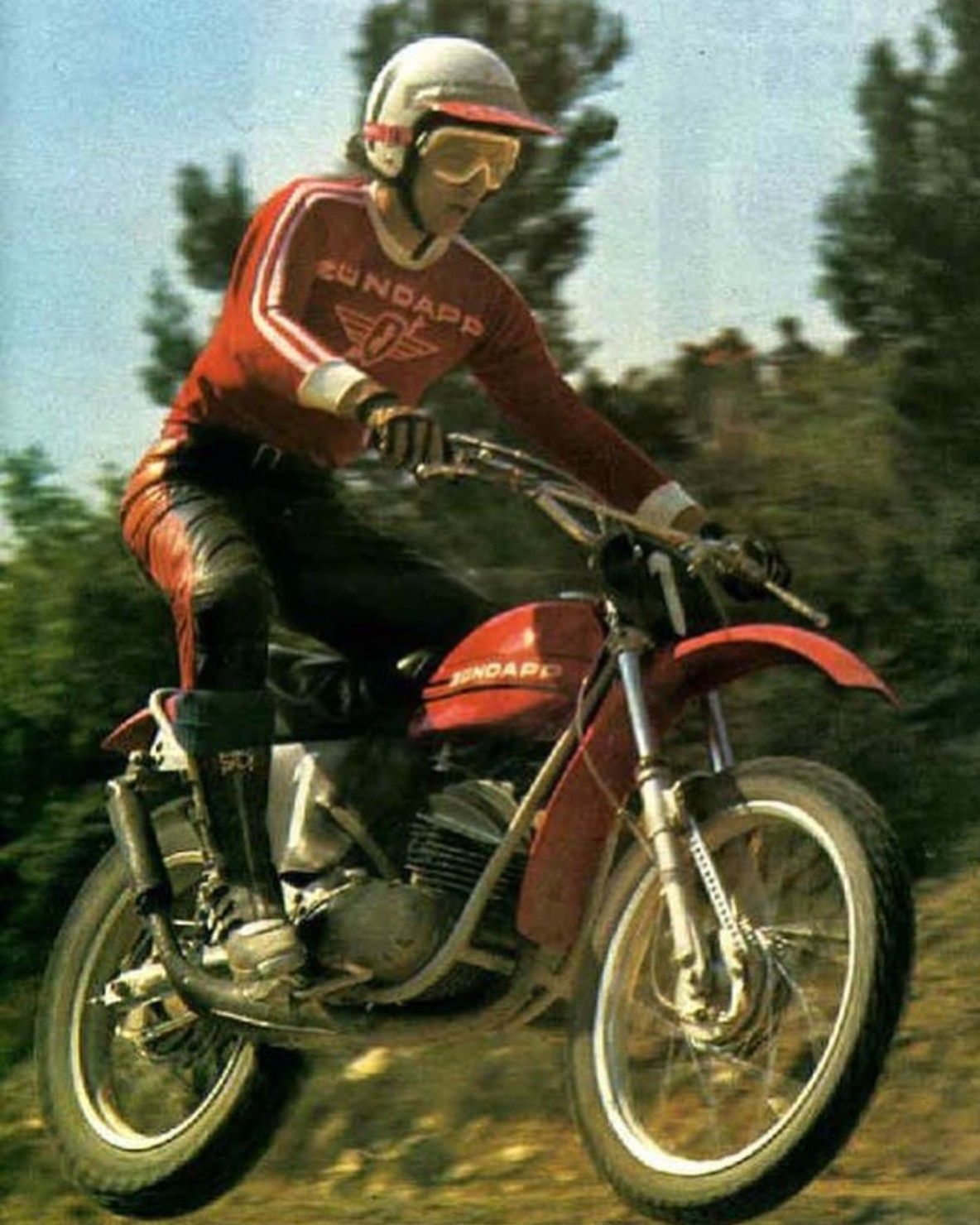
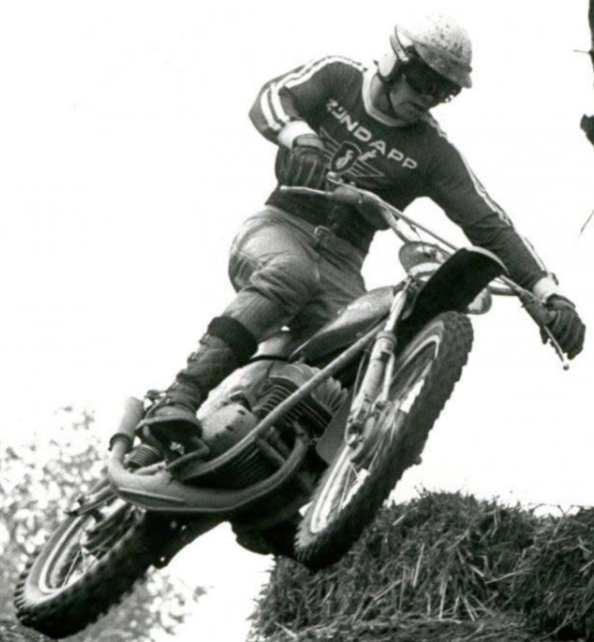
Off-road (off-road sports)
For decades, Zündapp was the dominant brand in classic off-road sports (now known as enduro).
- In the early 1970s, the factory team competed with great success in national and European motocross championships.
- The factory machines (GS models): From the 1950s onwards, Zündapp developed specialized off-road models (GS). The models with central tube frames and distinctive "buffalo tanks" were legendary.
- Successes: Between 1950 and 1984, Zündapp won a total of 22 world championship titles and countless gold medals at the International Six Days Trial (ISDT/ISDE).
- Displacement: The focus was on the small classes (50, 75, 100, and 125 cc), and later also 175 cc.
- Technical features: The GS engines had pull-type gearboxes, which were considered extremely robust. The 125cc factory machines of the late 1970s produced over 20 hp and were technically the benchmark.
Export partners and licensed production
Zündapp pursued a very active export strategy, both through the sale of complete vehicles and through licensing:
- Portugal (Famel): The most important partner for mopeds. Famel built countless models (e.g., the Famel XF-17) with Zündapp engines.
- Greece (Zündapp-Hellas): Zündapp models for the Greek market were assembled and partially manufactured in Thessaloniki.
- India (Enfield India): In the early 1980s, production of the Zündapp CS 25 and KS 50 was licensed in India as the "Enfield Fury" and "Explorer."
- USA: Export via Steen's and later via the McCulloch distribution network.
Third-party brands with Zündapp engines (OEM)
Unlike Sachs or Minarelli, Zündapp was selective when it came to supplying engines to other manufacturers, as it wanted to protect its own vehicle production. Nevertheless, Zündapp engines (mostly the 50 cc Type 284 engine) were used in some brands.